Free small-space tool
Shelf & Bin Fit Checker
Enter the usable shelf opening and the bin's outermost dimensions. Get a conservative fit result before ordering another organizer.
Measure first
Will this bin fit this shelf?
Use inches and measure the clear space inside the shelf—not the product's overall frame. Measure handles, lid rims, feet, and other protruding parts at the bin's widest points.
Sourced examples
Start with a documented opening and organizer pair
These presets use published product or minimum-opening dimensions. They are examples, not standard sizes; replace every field with measurements from your own opening and current product page before buying.
Preset dimensions and sources
- 24-inch closet basket: a 24 × 16 × 7.5-inch minimum opening and 24 × 16 × 7-inch Rev-A-Shelf basket, as listed by CabinetParts. The preset uses zero added allowance because the published minimum matches the basket width and depth exactly.
- 13-inch cube organizer: a 13.5 × 14.5 × 13.5-inch Brightroom cube opening and a 13 × 13 × 13-inch Brightroom fabric bin, as published by Target. The preset applies a 0.25-inch allowance.
- 24-inch under-sink vanity: a 9.25 × 19.5 × 19.5-inch minimum cabinet opening and an 8.75 × 18.75 × 18.88-inch Rev-A-Shelf organizer, as listed by CabinetParts. The preset applies a 0.25-inch allowance and still requires a separate pipe-path check.
Fits with the allowance
Two bins fit across each shelf.
At the entered dimensions, the bins fit front-facing without stacking.
- Per shelf
- 2 bins
- All openings
- 6 bins
- Width left
- 10 in
- Top clearance
- 8 in
- The 13-inch bin depth fits inside the 14-inch shelf depth.
- Use the bin's widest outside measurement, including lid rims and handles.
For context on how common tight layouts and missing overflow space are, see our U.S. small-apartment statistics.
Optional visual check
See the entered proportions in 3D
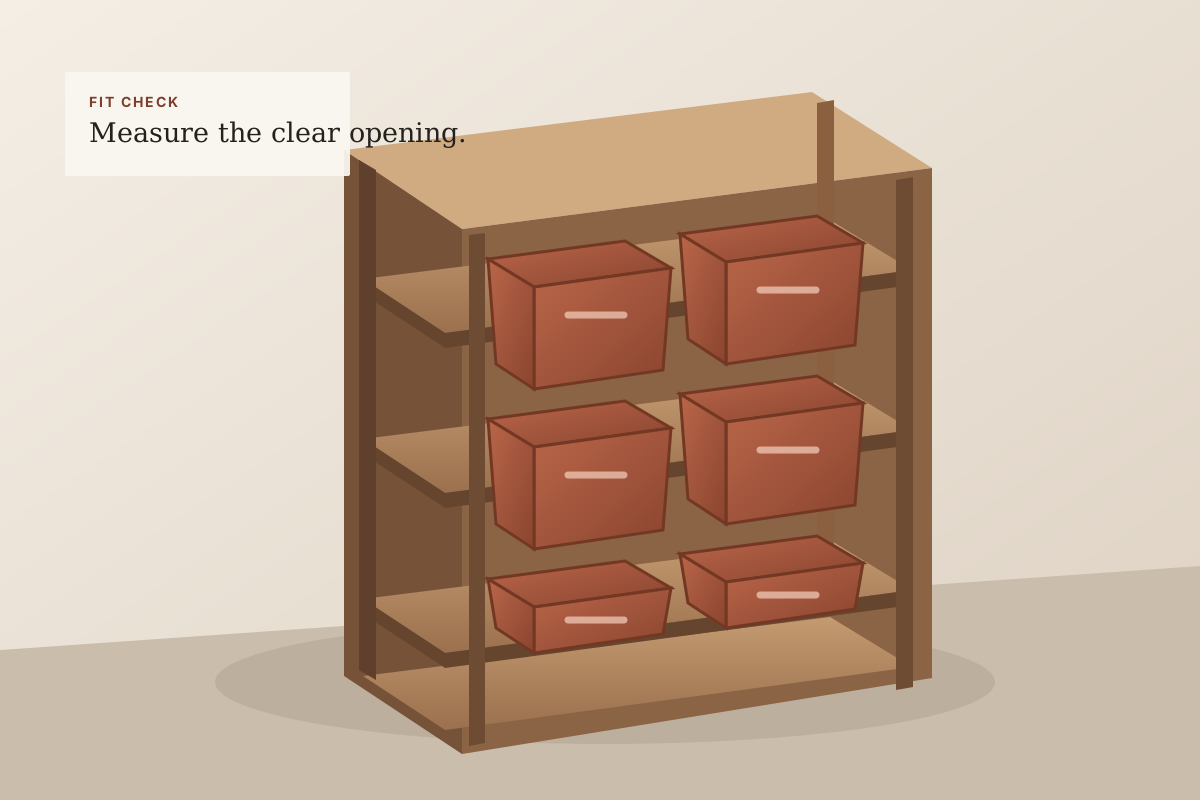
The calculator and written result work without the 3D view.
Measure the usable shelf opening
- Width: measure between posts, side panels, hinges, or shelf clips at the narrowest point.
- Depth: measure from the back obstruction to the front edge without letting the bin block a door or walkway.
- Height: measure the clear opening above the shelf. Leave extra reach room for open bins and lift-off lids.
- Bin: use the largest outside dimensions. Product listings may emphasize smaller interior capacity measurements.
What this first version checks
The calculator tests front-facing and 90-degree placement, applies your fit allowance, and reports the better arrangement. It treats each bin as a rectangular outside envelope; tapered sides, wheels, shelf lips, and door swing still need a final manual check.
Continue the fit check
- Measure-Before-You-Buy Storage Checklist for doors, baseboards, pipes, and walkways.
- Storage Bins for Small Apartments for open, lidded, clear, and fabric formats.
- Clear Bins vs. Fabric Bins for visibility, dust control, and open-shelf appearance.
- Renter-Friendly Shelving for stability, depth, and no-drill constraints.