The short answer
What usually works
Make shallow cabinets, shelf pantries, and no-pantry kitchens easier to scan before grocery trips without decanting everything.
- Use risers for cans, bins for loose packets, and turntables only where you can see the full circle.
- Decanting is optional; visibility, washable surfaces, and repeatable food zones matter more than matching containers.
- Measure cabinet depth before buying pull-out drawers; hinges and pipes often steal usable space.
Who this guide helps
- Apartment kitchens
- Shelf pantries
- Shared grocery storage
- Bulk snacks and refills
Product-type comparison
| Option | Best for | Check before buying |
|---|---|---|
| Tiered can risers | Cans, jars, spices | Need enough vertical clearance |
| Clear pantry bins | Snacks, packets, breakfast items | Can become heavy if oversized |
| Turntables | Oils, condiments, small jars | Waste corners if the shelf is too narrow |
| Pull-out drawers | Deep lower cabinets | Check hinges, lips, and pipe clearance |
How to choose
- Depth: A 10-inch organizer in a 9.5-inch cabinet becomes an annoying return.
- Food type: Loose packets need bins; cans need risers; oils need wipeable surfaces.
- Refill rhythm: Leave space for unopened duplicates so grocery overflow does not land on the counter.
- Cleaning: Kitchen organizers should be smooth and washable.
Measure before buying
Apartment pantry storage should make food visible before grocery trips. The most reliable system is risers for repeated cans or jars, narrow bins for loose packets, and one empty landing zone for unopened refills.
- Cabinet depth: Measure the inside depth with the door closed. Hinges and lips can steal half an inch or more.
- Shelf height: Risers need vertical clearance for the back row. Measure the tallest can or jar you actually buy.
- Bin weight: Deep pantry bins become heavy fast. Keep snack and packet bins narrow enough to pull with one hand.
- Turntable diameter: A turntable only helps when the full circle can spin without hitting side walls or pipes.
Apartment size scenarios
Use these examples to translate the guide into a real apartment layout before you compare products.
12-inch-deep upper cabinet
Use shallow bins and low risers so cans and jars do not hide behind each other. A deep pull-out bin can feel convenient online but becomes awkward when it is above shoulder height.
24-inch-wide base cabinet
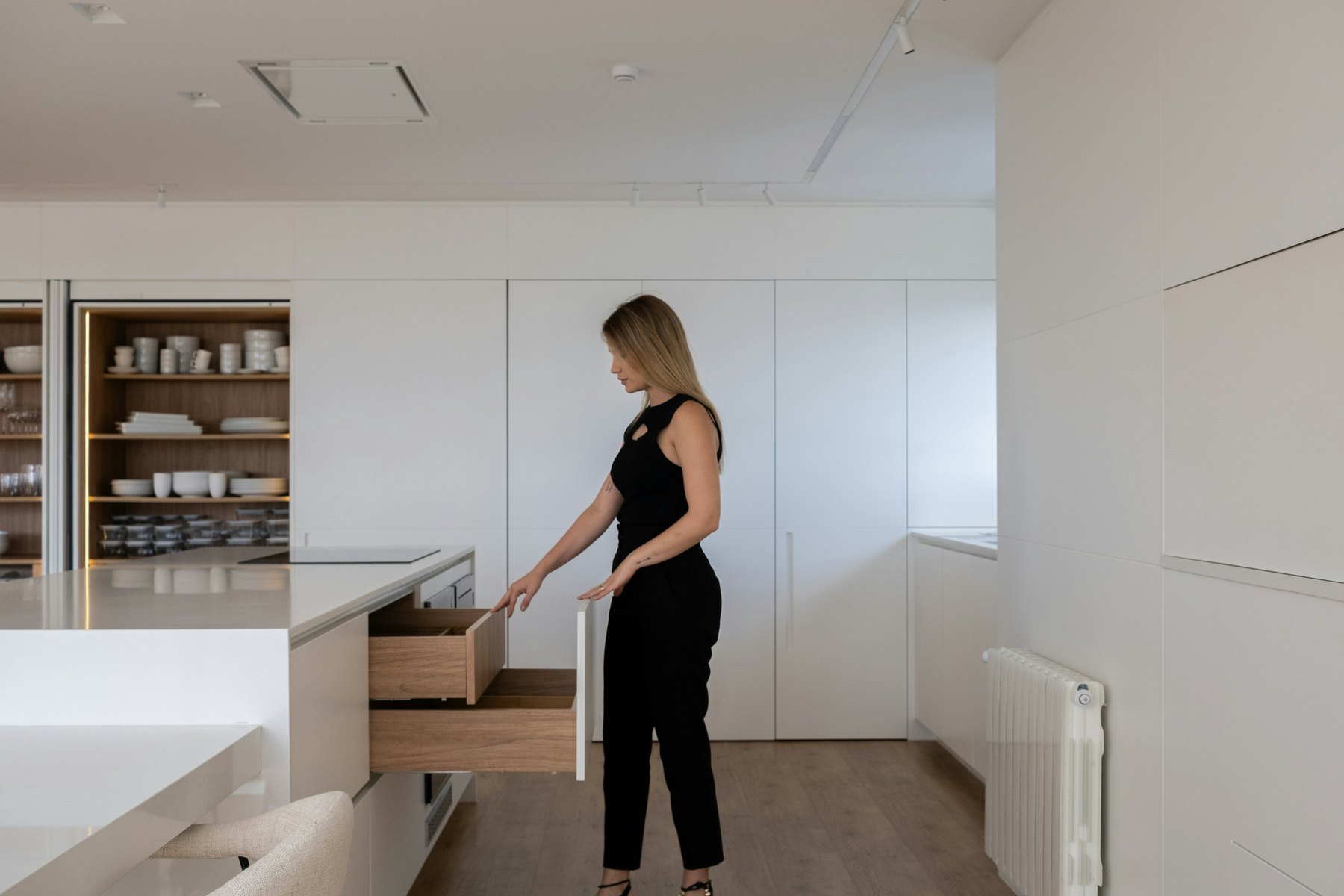
Divide the cabinet into one pull-out zone for packets or snacks and one vertical zone for oils, refills, or cereal boxes. Check the hinge, center stile, and door lip before assuming a 24-inch product will slide cleanly.
Tiny kitchen with no pantry closet
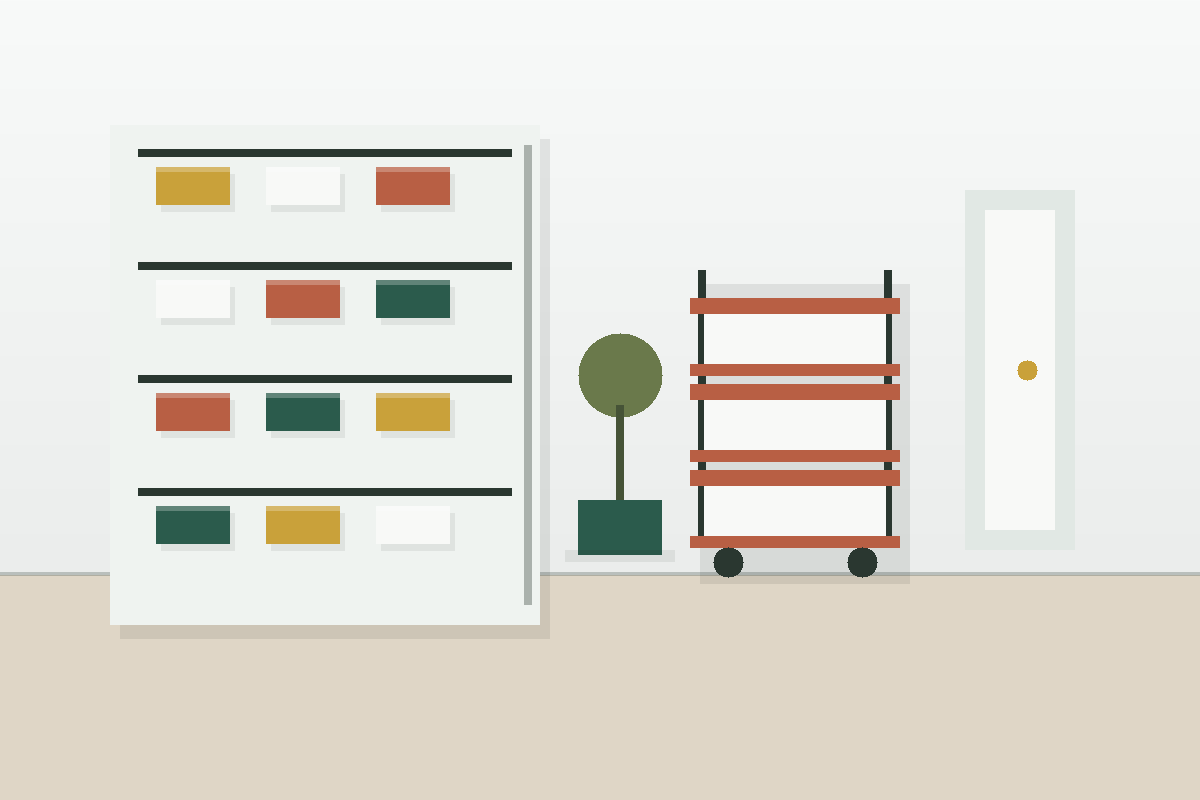
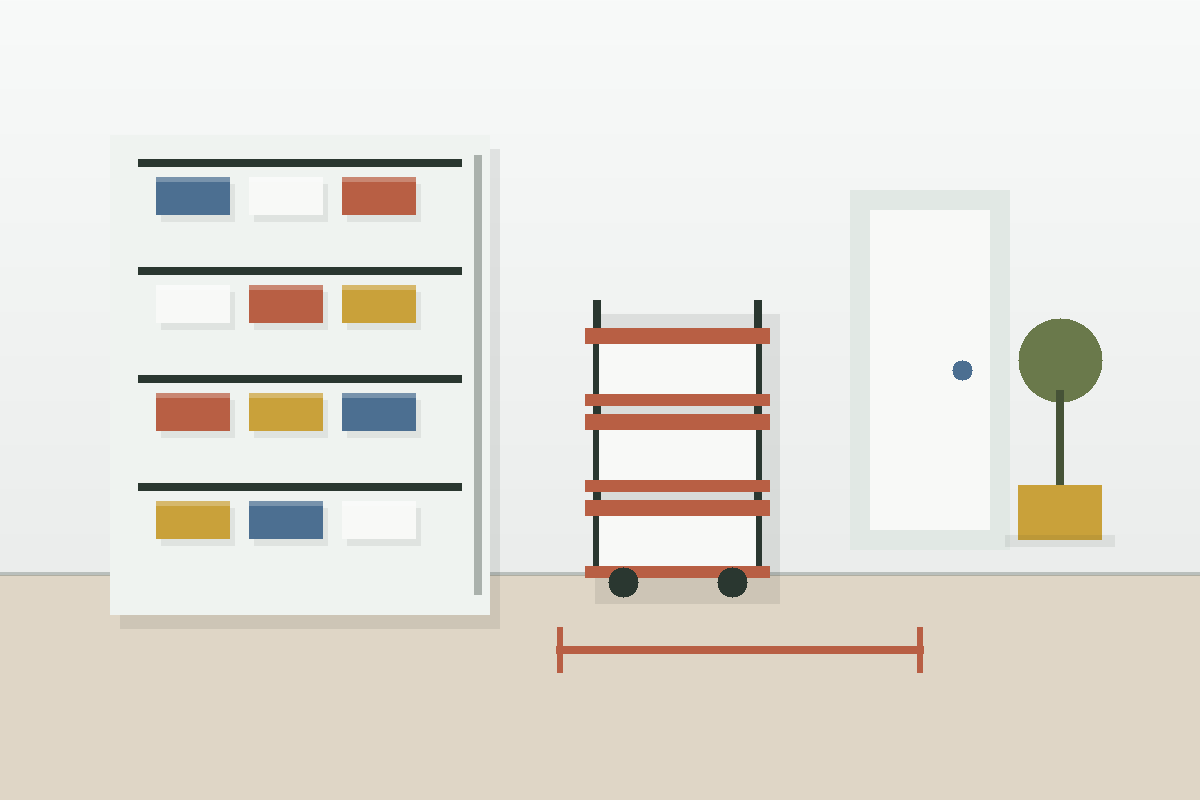
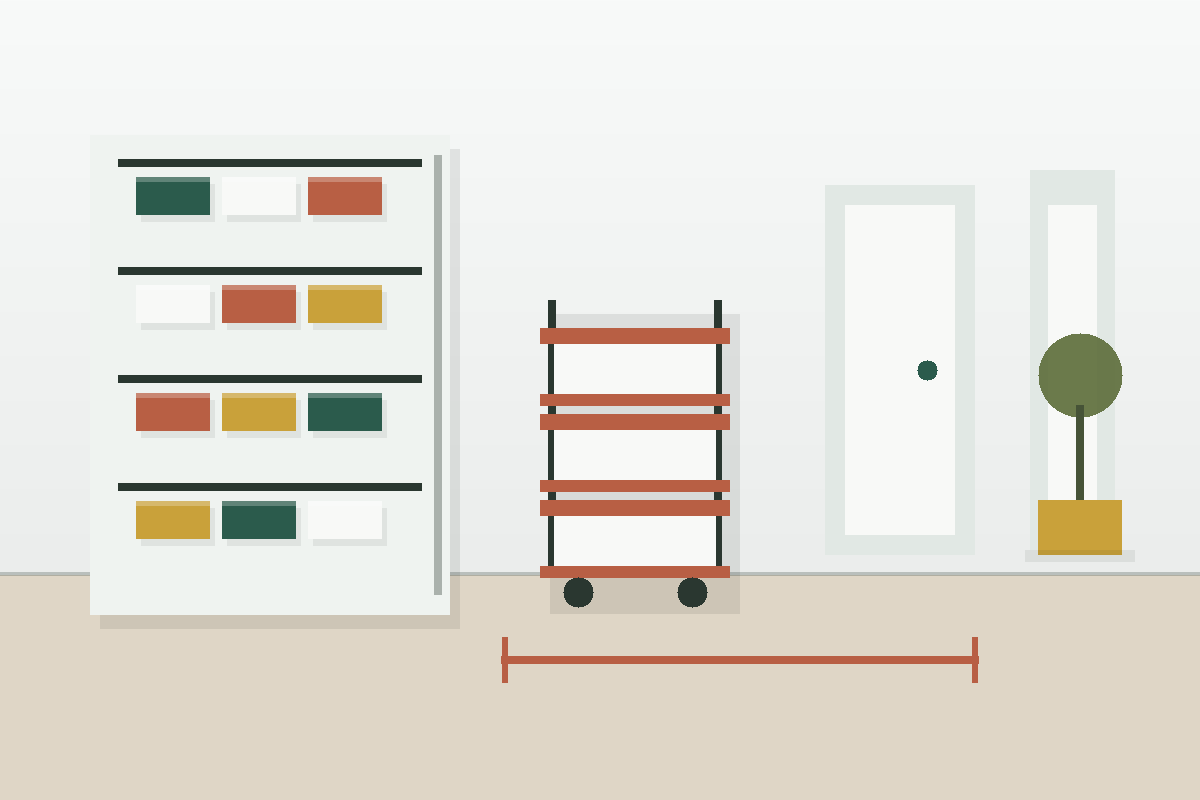
A narrow cart works best when the walkway still has about 30 inches of clear passage. If the cart blocks the oven, dishwasher, or fridge swing, use cabinet risers first.
400 sq ft apartment kitchen wall
If the kitchen opens directly into the living area, keep bulk packaging behind cabinet doors and use one small visible cart only for daily items. Open overflow near the sofa reads as clutter faster than it does in a separate kitchen.
Choose it if / skip it if
Choose it if
- You rebuy food because pantry items disappear behind each other.
- Your pantry is a cabinet, shelf, or shared kitchen zone rather than a walk-in closet.
- You want organization without decanting every dry good into matching containers.
Skip it if
- You have very shallow shelves where risers would push items forward.
- You mainly store bulk bags that need large airtight containers.
- Your lower cabinets have lips or hinges that block pull-out drawers.
Common small-space mistakes
- Buying a full matching container set before sorting actual food categories.
- Using one large snack bin. Smaller bins by meal moment are easier to scan.
- Putting turntables in narrow corners where only half the circle is usable.
Layout fit examples
Use the product type as a match for a specific apartment layout, not as a universal fix. The same organizer can feel excellent in one zone and annoying in another if reach, door swing, lighting, or cleaning access is wrong.
Often works well
- Tiered can risers: strongest for cans, jars, spices.
- Clear pantry bins: strongest for snacks, packets, breakfast items.
- Turntables: strongest for oils, condiments, small jars.
Check twice when
- Tiered can risers: check twice when need enough vertical clearance.
- Clear pantry bins: check twice when can become heavy if oversized.
- Turntables: check twice when waste corners if the shelf is too narrow.
Product page checks
Before treating an item as a serious candidate, verify the current retailer page rather than relying on a photo or a short product title. Small-space storage fails most often when the listed size, material, mounting method, or return policy is ignored.
- Exact dimensions: Compare listed width, depth, height, and clearance to the measured apartment zone for this kitchen & pantry project.
- Material and finish: Confirm whether the surfaces are plastic, metal, fabric, bamboo, wire, or MDF because cleaning, moisture tolerance, and durability change quickly by material.
- Assembly and removal: Look for required tools, wall fasteners, adhesive cure times, leveling feet, wheels, or hardware that could affect a rental or a future move.
- Load and daily use: Match the stated load limit to the heaviest realistic contents, then ask whether the item will still be easy to open, pull, lift, or clean when full.
- Return window: Check the retailer return policy before ordering large or assembled items, especially when the fit depends on a narrow closet, cabinet, or entryway.
Apartment fit note
A small-kitchen pantry should keep one shelf at least 20% empty. That buffer prevents grocery overflow from landing on the counter after every shopping trip.
Pros and cons
Pros
- Reduces duplicate grocery purchases
- Makes small cabinets scan quickly
- Easy to move between rentals
Cons
- Matching containers can get expensive
- Overly deep bins hide food
- Pull-outs require precise measuring
Alternative: If your cabinets are shallow, skip pull-outs and use narrow bins with labels facing forward.
Small-space setup steps
- Group foods by meal moment: breakfast, cooking, snacks, baking, refills.
- Add risers where items stack visually and bins where items scatter.
- Keep a small empty zone for this week's groceries before opening refills.
Product examples to compare
Use these links as starting points for comparing dimensions, materials, availability, retailer policies, and whether the item fits your measured space.
Related small-space guides
Continue with guides that solve the next storage decision in the same apartment zone.
FAQ
What pantry organizers should I buy first for a small kitchen?
Start with clear bins for packets and snacks, then add a tiered riser for cans or jars. Those two pieces usually improve visibility before you need specialty drawers or matching containers.
Do I need airtight containers?
Only for foods that go stale quickly or attract pests. Many apartment pantries work well with original packaging grouped inside clear bins.
Are turntables good for pantry corners?
They help if the shelf is deep enough for a full spin and you can see items at the back. In a narrow cabinet, a shallow bin or riser often uses the space better.
How do I organize a kitchen with no pantry closet?
Use one cabinet as a dry-goods zone, add risers for repeated cans, keep snacks in narrow bins, and consider a slim cart only if it does not block appliance doors or the walkway.
How deep should pantry bins be?
Choose bins that are slightly shorter than the usable cabinet depth after hinges and door lips. A bin that technically fits but scrapes the door will be annoying every day.