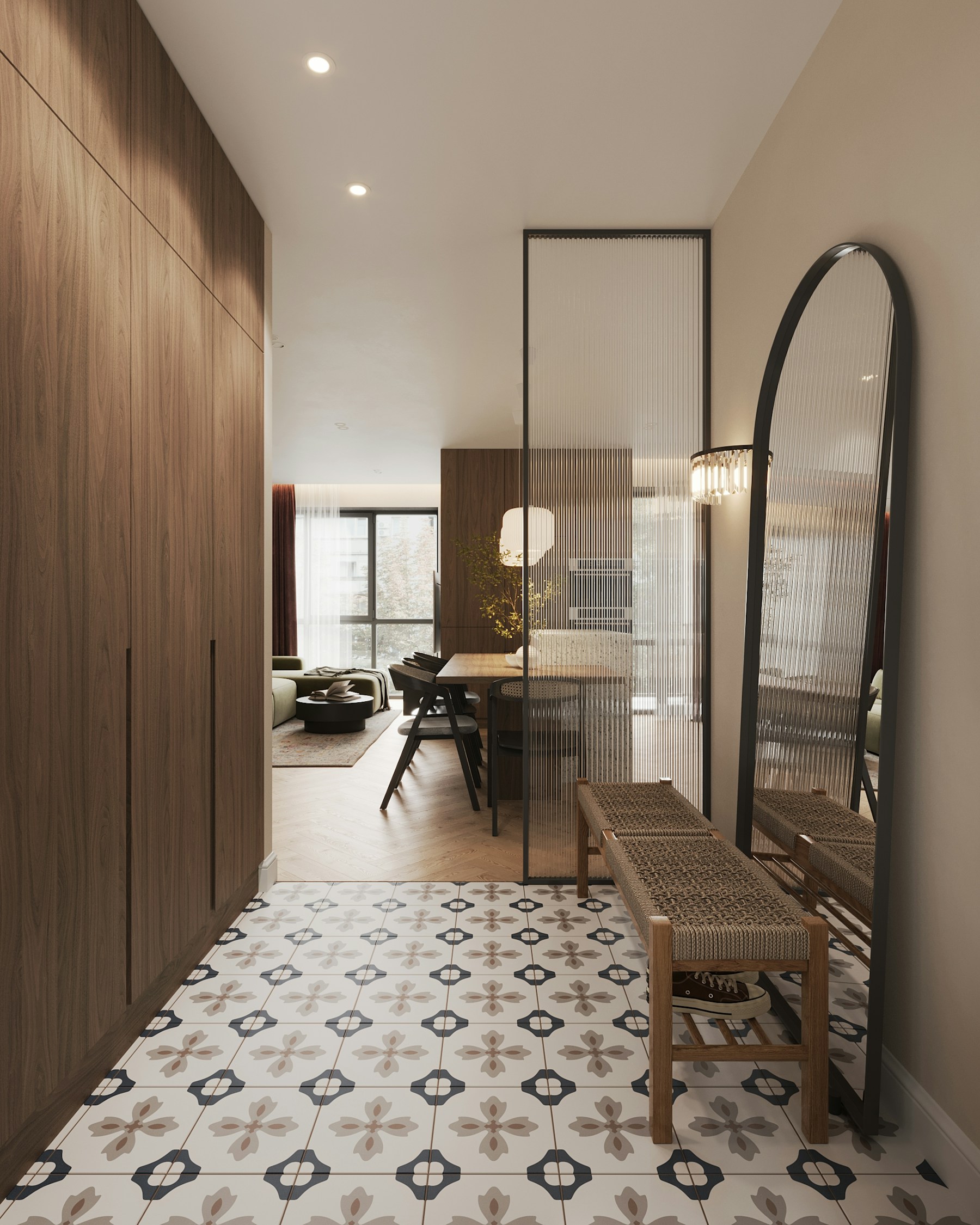
The short answer
What usually works in a small apartment
A compact entryway bench has to pass three tests at once: it must leave a comfortable route from the door, provide a seat height and load rating that match the household, and store the daily shoes or bags it was bought to contain. Shallow is not always better if shoes project into the aisle, and a wide bench is not useful when the door or closet cannot open. The shortlist below spans 23 5/8 to 42 1/2 inches wide and includes open racks, a slim flip-front cabinet, and an open storage bench.
- Tape the full bench footprint and open every nearby door before ordering.
- Confirm a published seating load; a shoe rack is not automatically a seat.
- Plan a tray or washable zone for wet shoes instead of trapping moisture in storage.
6 real products compared by fit
These are dimensional reference points, not a universal ranking. Prices are snapshots checked August 21, 2026. Open the current source page before buying to verify the exact finish, model, availability, included hardware, return terms, and current instructions.
| Product | Price checked | Outside dimensions | Capacity | Published load | Best fit |
|---|---|---|---|---|---|
| IKEA RAGGBERG bench with shoe storage | $24.99 | 23 5/8 W x 13 3/4 D x 17 3/4 H in | About 3 pairs | Numeric seating load not published | The shortest wall bay and a small daily shoe rotation |
| IKEA PERJOHAN bench with storage | $79.99 | 39 3/8 W x 11 D x 17 3/4 H in | Open storage: 34 1/2 L x 8 D x 5 1/8 H in | Tested for 243 lb | A shallow wall where baskets, bags, or shoes need flexible open storage |
| IKEA NIPÅSEN bench with shoe storage | $49.99 | 31 1/8 W x 13 3/4 D x 20 1/2 H in | About 4 pairs on shelf; up to 8 using floor space and matching mat | 220.5 lb | Easy-clean open storage and a higher seat |
| IKEA TJUSIG bench with shoe storage | $69.99 | 42 1/2 W x 13 3/8 D x 19 5/8 H in | About 8 pairs | Numeric seating load not published | A longer entry wall serving two people |
| IKEA HEMNES bench with shoe storage | $99.99 | 33 1/2 W x 12 5/8 D x 25 5/8 H in | About 7 pairs | Numeric seating load not published | A higher landing surface with two open shoe shelves |
| HOMCOM slim flip-drawer shoe bench | $94.99 when checked | 31.5 W x 10.2 D x 18.7 H in | Up to 8 pairs, listed through US size 11 | 265 lb seat; 22 lb cabinet | The shallowest closed-shoe option in the shortlist |
Product-by-product apartment fit notes
Outside dimensions are only the first screen. The notes below translate the published specifications into door, walkway, access, cleaning, and installation checks. A missing rating is left as not published rather than being estimated from a similar product.
Pick 1 · $24.99 checked August 21, 2026
IKEA RAGGBERG bench with shoe storage
RAGGBERG is the narrowest true bench in the shortlist. Its 17 3/4-inch height is close to chair height, while the open shelf makes daily pairs easy to reach. The tradeoff is capacity: three pairs can be enough for one person but not a shared entry. Untreated pine is customizable, yet it also needs protection from wet footwear and gritty floors.
Check before buying: The maker cites domestic seating standards but no numeric load; do not substitute a reviewer's body weight for a rating.
Pick 2 · $79.99 checked August 21, 2026
IKEA PERJOHAN bench with storage
PERJOHAN is only 11 inches deep despite its wide two-to-three-person seat. The maker publishes both a 243-pound tested load and the inner storage dimensions, so you can pre-fit baskets instead of shopping by the outside silhouette. The storage walls are only 5 1/8 inches high; that helps access but does not hide clutter. Treat it as a shallow landing shelf, not a closed chest.
Check before buying: The product is for indoor use and is not approved for bathrooms; untreated pine needs a suitable entry-zone care plan.
Pick 3 · $49.99 checked August 21, 2026
IKEA NIPÅSEN bench with shoe storage
NIPÅSEN uses stretched metal so grit can fall through and the 9 1/2-inch clearance below remains cleanable. The 20 1/2-inch seat is higher than the wood benches here, which some adults may prefer and some children may not. The eight-pair claim depends on using the floor zone under the shelf, so plan a washable mat and confirm that shoes stay within the 13 3/4-inch depth.
Check before buying: Capacity is split between the shelf and floor; do not count the same space twice when adding baskets.
Pick 4 · $69.99 checked August 21, 2026
IKEA TJUSIG bench with shoe storage
TJUSIG offers two open shoe levels and the largest width in this shortlist. It is more practical for a shared household than a 24-inch bench, but 42 1/2 inches can collide with closet doors, radiators, or a turn in the hall. Use painter's tape for the entire width and sit-height footprint, then open the front door fully before deciding the capacity is worth the span.
Check before buying: No numeric seating limit is shown on the product page; follow current assembly and use instructions.
Pick 5 · $99.99 checked August 21, 2026
IKEA HEMNES bench with shoe storage
HEMNES is notably taller than a typical chair-height bench. That can make the top useful for bags or brief perching, but it may not suit everyone as a shoe-changing seat. The 12 5/8-inch depth is moderate and the seven-pair estimate is realistic only when shoe heights fit the two rail shelves. Measure the intended user's comfort at 25 5/8 inches before ordering.
Check before buying: The maker does not publish a weight-bearing limit on the page; do not assume the word bench supplies one.
Pick 6 · $94.99 when checked checked August 21, 2026
HOMCOM slim flip-drawer shoe bench
The HOMCOM design combines a 10.2-inch-deep body with a flip drawer and published seat and cabinet limits. That makes it attractive when open shoes would look busy. Closed storage adds a new clearance test: the front must swing without meeting the user's legs, a wall return, or the open entry door. Large, wide, and high-volume shoes may reduce the stated eight-pair capacity.
Check before buying: Verify the current retailer listing, assembly hardware, ventilation, return terms, and the exact shoe fit before purchase.
Protect the door and walking path first
Open the entry door, closet door, and any nearby cabinet one at a time and together. Tape the bench width and depth, then add the user's legs while seated and the projection of stored shoes. This loaded-use envelope is larger than the furniture footprint and is the number that decides whether the entry still functions.
Building codes are a useful safety reference, but they are not a shopping template and local rules vary. The 2021 IRC lists a minimum hallway width of three feet in covered residential contexts. Do not use that figure to justify narrowing an existing required route; preserve the apartment's clear egress and ask the property manager when the route is uncertain.
- Door leaf and handle sweep
- Seated knee and foot space
- Clear route after shoes and bags are stored
Choose seat height and load deliberately
The compared benches range from 17 3/4 to 25 5/8 inches high. That difference is large in daily use. Test the intended height with a dining chair, stool, or stable household seat before ordering. Someone with limited balance may value a firm seat and easy rise more than an extra shoe shelf.
Look for a numeric tested seating load when possible. PERJOHAN lists 243 pounds, NIPÅSEN 220.5 pounds, and the HOMCOM listing separates a 265-pound seat limit from a 22-pound cabinet limit. When no numeric limit is published, follow the maker's current instructions and do not invent one from materials, appearance, or reviews.
- Seat height tested by the actual user
- Numeric seating load where published
- Stable assembly on the apartment floor
Open shelf, basket bay, or flip drawer
Open shoe shelves are fastest and easiest to clean, but they leave mixed footwear visible. A shallow basket bay such as PERJOHAN can hold bags, hats, or a measured container without dictating the category. A flip drawer hides shoes in only 10.2 inches of depth, yet introduces front swing, shoe-shape, ventilation, and hinge checks.
Choose the format that solves the repeated entry behavior. If shoes are kicked off wet, an open rack and tray will outperform a closed drawer. If bags always land on the floor, an open bay may be more useful than a second shoe tier. Avoid buying a multipurpose bench that is mediocre at the one job the household repeats every day.
- Open shelf for speed and airflow
- Basket bay for mixed soft goods
- Closed drawer for visual calm after a fit test
Translate pair counts into household capacity
A maker's pair count is an estimate based on typical shoes. Test the largest everyday pairs against shelf width, depth, and spacing. NIPÅSEN's headline eight-pair arrangement uses both the shelf and the floor below, while RAGGBERG holds about three pairs. These are different storage systems even if both photos show tidy entries.
Set a daily allowance: perhaps two pairs per resident plus one guest or weather pair. Move seasonal shoes elsewhere. If the bench also stores baskets, deduct those inches from shoe capacity before purchase. This prevents the seat from becoming an overflow platform surrounded by footwear—the exact problem it was meant to solve.
- Largest daily footwear
- Pairs allowed per resident
- Space deducted for baskets, trays, and boots
Design a cleanable wet-shoe zone
Place a washable tray where wet shoes first land and make sure it can slide out without lifting the bench. Open metal shelves let grit fall through, which is helpful only when the floor remains reachable. Closed drawers should receive dry shoes unless their materials and care instructions explicitly support the moisture exposure.
Material affects maintenance. Untreated pine can be personalized but should not sit in standing water; powder-coated metal is easy to wipe but still needs joints and damaged finish checked; fiberboard tops should be protected from repeated wet bags. Follow the product's care instructions rather than applying a universal cleaning spray.
- Removable tray sized to the actual drip zone
- Floor access without moving a loaded bench
- Care method matched to wood, metal, or fiberboard
Use the return window as a fit test
On arrival, compare every panel and assembled dimension with the listing before forcing hardware. Assemble on a protected level surface, tighten in the order shown, and never sit on an incomplete frame. Position the finished bench on the taped zone, load the real shoes, and repeat every door and seated-clearance test.
Keep packaging until the household has used the entry normally. Check for rocking, loose joints, blocked vents, trapped grit, and bags accumulating on the seat. If the product makes the route narrower or the stored categories harder to reach, returning it is better than reorganizing the apartment around a bench that passed only the empty-footprint test.
- Verify model and dimensions before assembly
- Load real shoes and seat users
- Recheck joints and cleaning access after one week
Final fit check before checkout
Use this as a last pass after you have narrowed the list to one or two exact models. Product photos are not scaled to your room, and a nominal capacity does not prove access after the item is loaded.
| Check | Measure | Verify |
|---|---|---|
| Bench envelope | Width, depth, height | Add seated knees and stored shoes |
| Door route | Entry and closet swing | Test all common door positions |
| Seat | User height and published load | Do not assume a shoe rack is sittable |
| Storage | Actual shoe or basket dimensions | Deduct tray and boot zones |
| Cleaning | Floor and wet-shoe access | Tray must remove without lifting bench |
Related small-space guides
Continue with guides that solve the next storage decision in the same apartment zone.
FAQ
How deep should an entryway bench be for a small apartment?
Many compact benches are about 12 to 15 inches deep, but advertised depth is only the starting point. Tape the full footprint, open every nearby door, and carry a bag through the remaining path before buying.
Should an entryway bench have open or closed storage?
Open storage is faster for daily shoes and airflow. Closed storage looks calmer but can hide clutter and needs enough room to open.
What height should an entryway bench be?
A seat around normal chair height, often roughly 17 to 19 inches, is a useful starting point. Confirm the listed height, the cushion compression, and whether everyone can sit and stand comfortably.
Can a bench fit in a narrow hallway?
Yes, if it leaves a comfortable path and does not block the front door, closet door, vents, or light switches.
What should go above an entryway bench?
A hook rail, small mirror, wall pocket, or key tray can finish the drop zone without adding more floor furniture.