The short answer
What usually works
Add vertical storage in a rental without turning the wall, walkway, or move-out inspection into the problem.
- Freestanding shelves are the safest default when wall material or lease rules are unclear.
- Ladder shelves and bookcases need anti-tip planning, even when they are not wall-mounted.
- Tension shelves can help in bathrooms and closets, but only when the contact points are solid, flat, and suited to the product's load guidance.
Who this guide helps
- Renters
- Studio apartments
- Small home offices
- No-closet rooms
Product-type comparison
| Option | Best for | Check before buying |
|---|---|---|
| Freestanding bookcase | Living rooms and bedrooms | Needs anti-tip strategy and floor space |
| Ladder shelf | Decor plus light storage | Not for heavy bins or appliances |
| Tension pole shelf | Bathrooms and closet corners | Requires solid, level contact points |
| Over-door shelf or rack | Pantries, closets, bathrooms | Check door clearance and hinge strength |
How to choose
- Lease rules: When in doubt, choose freestanding storage and document the room before moving out.
- Weight: Books, appliances, and tools need sturdy shelves, not decorative ledges.
- Footprint: Tall narrow shelves save floor area but must be stable.
- Exit path: Do not place shelving where it narrows a doorway or walkway.
Measure before buying
Renter-friendly shelving should be reversible, stable, and honest about weight. Freestanding pieces solve most storage problems; wall-mounted products should be reserved for light items and lease-approved surfaces.
- Wall material: Drywall, plaster, tile, brick, and hollow doors all change what is safe or allowed.
- Floor level: A leaning shelf or narrow bookcase needs a level floor and a stability plan.
- Load type: Books and appliances need sturdier shelves than decor, baskets, or towels.
- Move-out risk: Estimate not only installation time but also removal, patching, and deposit risk.
Apartment size scenarios
Use these examples to translate the guide into a real apartment layout before you compare products.
400 sq ft studio storage wall
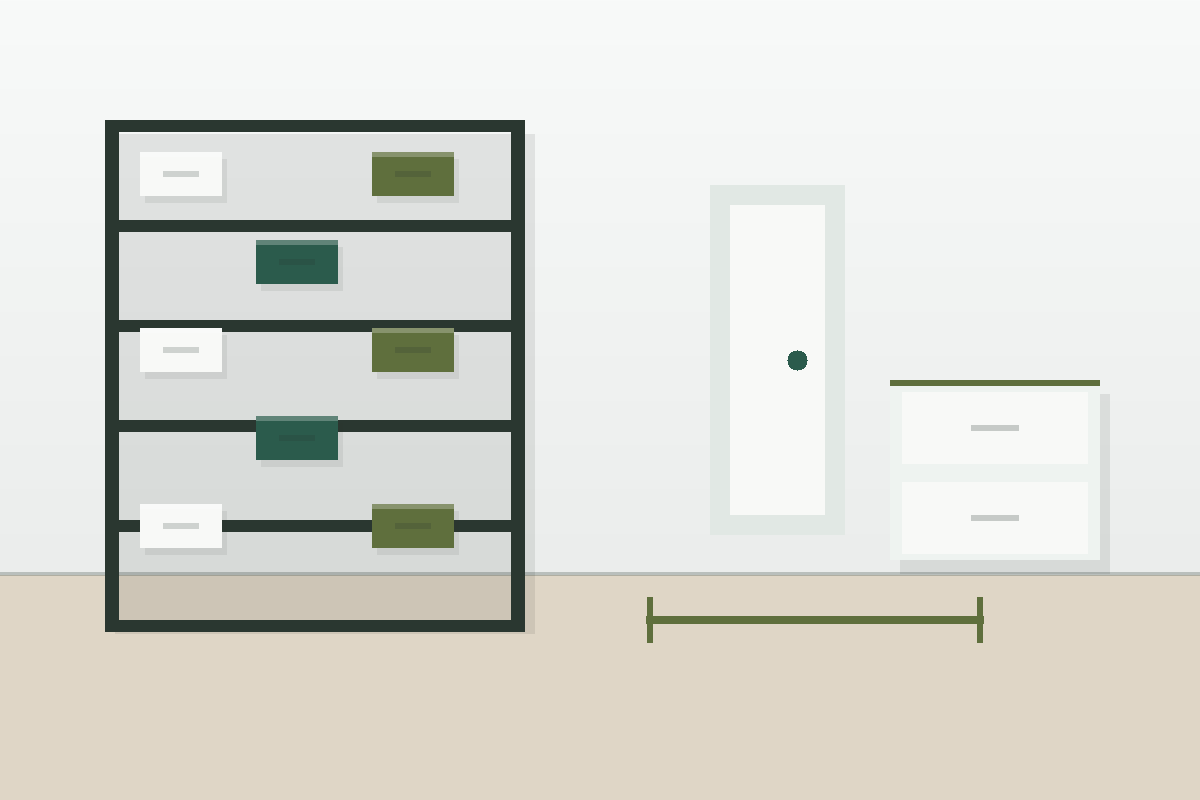
Use one freestanding shelf no deeper than 12 inches for visible bins, books, and daily items. In a studio, a taller but shallower shelf usually feels better than a deep unit that pushes into the living path.
Narrow 30-inch walkway
Keep shelving around 10 to 12 inches deep so baskets do not crowd the path. If shoes, laundry, or cabinet doors need the same walkway, go vertical rather than deeper.
Blank wall with unknown material
Start with a freestanding bookcase, leaning shelf, or over-door organizer before adhesive or wall-mounted shelves. Unknown plaster, tile, or hollow doors change the risk quickly.
Multi-use living room wall
Use one low closed-storage piece for heavy items and one lighter open shelf above or beside it. That split keeps dense weight low while still adding vertical storage.
Choose it if / skip it if
Choose it if
- Your lease limits drilling or you are unsure what the wall can hold.
- You need vertical storage that can move to the next apartment.
- You store mixed lightweight items: towels, bins, office supplies, or pantry overflow.
Skip it if
- You need to store heavy books, tools, or appliances without anchoring.
- Children, pets, or high-traffic corners make tipping risk unacceptable.
- The shelf would block vents, windows, switches, or walking paths.
Common small-space mistakes
- Confusing damage-free with weight-safe. Adhesive products still have strict load limits.
- Placing tall narrow shelves without a stability plan.
- Using decorative ladder shelves for dense storage.
Layout fit examples
Use the product type as a match for a specific apartment layout, not as a universal fix. The same organizer can feel excellent in one zone and annoying in another if reach, door swing, lighting, or cleaning access is wrong.
Often works well
- Freestanding bookcase: strongest for living rooms and bedrooms.
- Ladder shelf: strongest for decor plus light storage.
- Tension pole shelf: strongest for bathrooms and closet corners.
Check twice when
- Freestanding bookcase: check twice when needs anti-tip strategy and floor space.
- Ladder shelf: check twice when not for heavy bins or appliances.
- Tension pole shelf: check twice when requires solid, level contact points.
Product page checks
Before treating an item as a serious candidate, verify the current retailer page rather than relying on a photo or a short product title. Small-space storage fails most often when the listed size, material, mounting method, or return policy is ignored.
- Exact dimensions: Compare listed width, depth, height, and clearance to the measured apartment zone for this renter-friendly shelving project.
- Material and finish: Confirm whether the surfaces are plastic, metal, fabric, bamboo, wire, or MDF because cleaning, moisture tolerance, and durability change quickly by material.
- Assembly and removal: Look for required tools, wall fasteners, adhesive cure times, leveling feet, wheels, or hardware that could affect a rental or a future move.
- Load and daily use: Match the stated load limit to the heaviest realistic contents, then ask whether the item will still be easy to open, pull, lift, or clean when full.
- Return window: Check the retailer return policy before ordering large or assembled items, especially when the fit depends on a narrow closet, cabinet, or entryway.
Apartment fit note
For renters, the safest default order is freestanding first, over-door second, tension only where surfaces are solid, and adhesive only for light daily items.
Pros and cons
Pros
- Adds storage without renovation
- Flexible between rooms
- Useful after the next move
Cons
- Freestanding units still need stability planning
- Open shelves require editing
- Cheap finishes chip during moves
Alternative: If you cannot add shelves, use a rolling cart or stackable drawer unit that can sit inside existing furniture gaps.
Small-space setup steps
- Choose the storage job first: books, pantry overflow, decor, linens, or daily gear.
- Pick the safest structure for that weight and room.
- Leave two inches of breathing room around doors, vents, and baseboards.
Product examples to compare
Use these links as starting points for comparing dimensions, materials, availability, retailer policies, and whether the item fits your measured space.
Related small-space guides
Continue with guides that solve the next storage decision in the same apartment zone.
 Renter-Friendly Shelving
Renter-Safe Mounting Guide for Storage and Shelving
Renter-Friendly Shelving
Renter-Safe Mounting Guide for Storage and Shelving
 Renter-Friendly Shelving
Wire Shelves vs Cube Shelves for Apartment Storage
Renter-Friendly Shelving
Wire Shelves vs Cube Shelves for Apartment Storage
 Renter-Friendly Shelving
Measure Before You Buy Storage Checklist for Apartments
Renter-Friendly Shelving
Measure Before You Buy Storage Checklist for Apartments
 Renter-Friendly Shelving
Budget Apartment Organization List for Small Spaces
Renter-Friendly Shelving
Budget Apartment Organization List for Small Spaces
FAQ
What shelving is safest for renters?
Freestanding shelving is usually the safest starting point because it avoids wall holes and can move with you. Tall pieces still need a stability plan, especially on uneven floors.
Can renters install shelves?
Some leases allow small holes; others do not. Confirm your lease, wall material, and move-out expectations before drilling or using anchors.
Are tension shelves safe?
They can be useful for light bathroom items or closet corners when installed on solid, level surfaces. They are not a substitute for heavy-duty shelving.
What shelving is best for books?
Use a sturdy freestanding bookcase with shelves rated for dense weight, keep heavy books low, and avoid decorative ladder shelves for full book storage.
How deep should shelves be in a narrow apartment walkway?
In tight paths, shelves around 10 to 12 inches deep are easier to live with than deep units. Keep enough clearance for doors, laundry baskets, and daily walking routes.