The short answer
What usually works
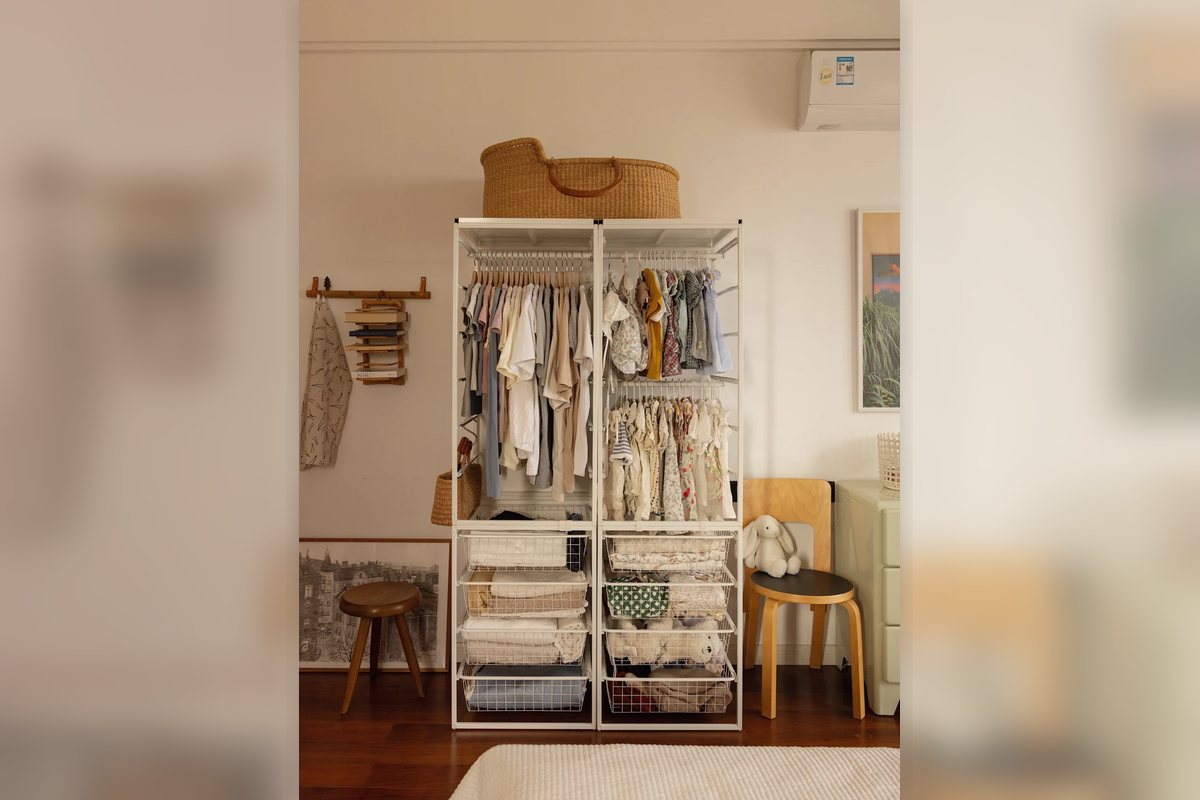
Rotate seasonal items without turning closets, under-bed storage, and top shelves into forgotten archives.
- Seasonal storage needs a review date, not just a bigger bin.
- Labels should say what is inside and when to reopen the container.
- Daily zones should not hold off-season clothing, holiday decor, or forgotten overflow.
More apartment layout examples
Use these storage setups as fit checks before choosing bins, shelves, drawers, or no-drill organizers for a rental.

Who this guide helps
- Small closets
- Under-bed storage
- Seasonal clothes
- Holiday decor
Product-type comparison
| Option | Best for | Check before buying |
|---|---|---|
| Lidded seasonal bin | Decor, scarves, backup linens | Label clearly and avoid mixed mystery bins |
| Under-bed bag | Sweaters, bedding, soft goods | Check bed clearance and dust protection |
| Vacuum bag | Bulky textiles | Not for delicate or daily items |
| Inventory label | Any seasonal container | Needs updating after edits |
How to choose
- Review rhythm: Seasonal storage should be opened and edited at least twice a year.
- Location: Keep low-access items high, low, or under furniture, not in daily zones.
- Protection: Use lids or zip covers for dust-prone storage.
- Retrieval: Labels should say what is inside and when to check it.
Measure before buying
Seasonal storage should protect off-season items while making the next review easy enough that containers do not become forgotten archives.
- Access frequency: Store low-access seasonal items in top shelves, under-bed zones, luggage, or labeled bins away from daily space.
- Container weight: Keep bins light enough for their storage height, especially above shoulder level.
- Dust protection: Choose lids, zip covers, or bags when items will sit for months.
- Review label: Add a date and category list so the container is easy to open, edit, and refresh.
Apartment size scenarios
Use these examples to translate the guide into a real apartment layout before you compare products.
Small closet
Move off-season items to labeled top-shelf or under-bed storage so current clothing has breathing room.
Holiday decor
Use a clear or clearly labeled bin by holiday or room, not one mixed decor container.
Seasonal bedding
Use under-bed bags or vacuum bags only when the bedding is off-season and not needed for guests every week.
Choose it if / skip it if
Choose it if
- Closets are crowded with off-season clothing, decor, linens, or gear.
- You need a repeatable seasonal swap routine.
- Labels and review dates will help prevent duplicate buying.
Skip it if
- The items are used weekly and should stay in daily storage.
- The container will become too heavy for its shelf location.
- The label is too vague to guide the next review.
Common small-space mistakes
- Using one large mixed bin for every seasonal category.
- Compressing delicate clothing for long periods.
- Labeling bins with vague words like extra or miscellaneous.
Layout fit examples
Use the product type as a match for a specific apartment layout, not as a universal fix. The same organizer can feel excellent in one zone and annoying in another if reach, door swing, lighting, or cleaning access is wrong.
Often works well
- Lidded seasonal bin: strongest for decor, scarves, backup linens.
- Under-bed bag: strongest for sweaters, bedding, soft goods.
- Vacuum bag: strongest for bulky textiles.
Check twice when
- Lidded seasonal bin: check twice when label clearly and avoid mixed mystery bins.
- Under-bed bag: check twice when check bed clearance and dust protection.
- Vacuum bag: check twice when not for delicate or daily items.
Product page checks
Before treating an item as a serious candidate, verify the current retailer page rather than relying on a photo or a short product title. Small-space storage fails most often when the listed size, material, mounting method, or return policy is ignored.
- Exact dimensions: Compare listed width, depth, height, and clearance to the measured apartment zone for this renter-friendly shelving project.
- Material and finish: Confirm whether the surfaces are plastic, metal, fabric, bamboo, wire, or MDF because cleaning, moisture tolerance, and durability change quickly by material.
- Assembly and removal: Look for required tools, wall fasteners, adhesive cure times, leveling feet, wheels, or hardware that could affect a rental or a future move.
- Load and daily use: Match the stated load limit to the heaviest realistic contents, then ask whether the item will still be easy to open, pull, lift, or clean when full.
- Return window: Check the retailer return policy before ordering large or assembled items, especially when the fit depends on a narrow closet, cabinet, or entryway.
Apartment fit note
Seasonal storage earns its space when it frees daily zones and still invites a twice-yearly review.
Pros and cons
Pros
- Frees daily storage
- Makes seasonal swaps easier
- Reduces duplicate purchases
Cons
- Can hide forgotten clutter
- Large bins get heavy
- Compression storage is awkward to access
Alternative: If you have very little seasonal gear, use one under-bed bag and one clear decor bin instead of a full seasonal system.
Small-space setup steps
- Sort seasonal items into keep, repair, donate, and discard.
- Choose containers based on access frequency and item type.
- Add a review date to each label before storing it away.
Product examples to compare
Use these links as starting points for comparing dimensions, materials, availability, retailer policies, and whether the item fits your measured space.
Related small-space guides
Continue with guides that solve the next storage decision in the same apartment zone.



FAQ
How often should I declutter seasonal storage?
Review seasonal storage at least twice a year, ideally when swapping warm-weather and cold-weather items.
What should go in under-bed seasonal storage?
Soft, flat, low-access items such as sweaters, spare bedding, off-season clothes, and some decor work well when protected from dust.
How do I avoid mystery bins?
Use labels with specific contents and a review date. Avoid vague labels such as extras, storage, or miscellaneous.
Are vacuum bags good for seasonal storage?
They are useful for bulky sturdy textiles, but not for delicate fibers, structured coats, or items you need frequently.
Where should seasonal items go in a small apartment?
Put seasonal items in low-access zones such as under-bed storage, top shelves, luggage, or labeled bins, while keeping daily zones free for current routines.