The short answer
What usually works
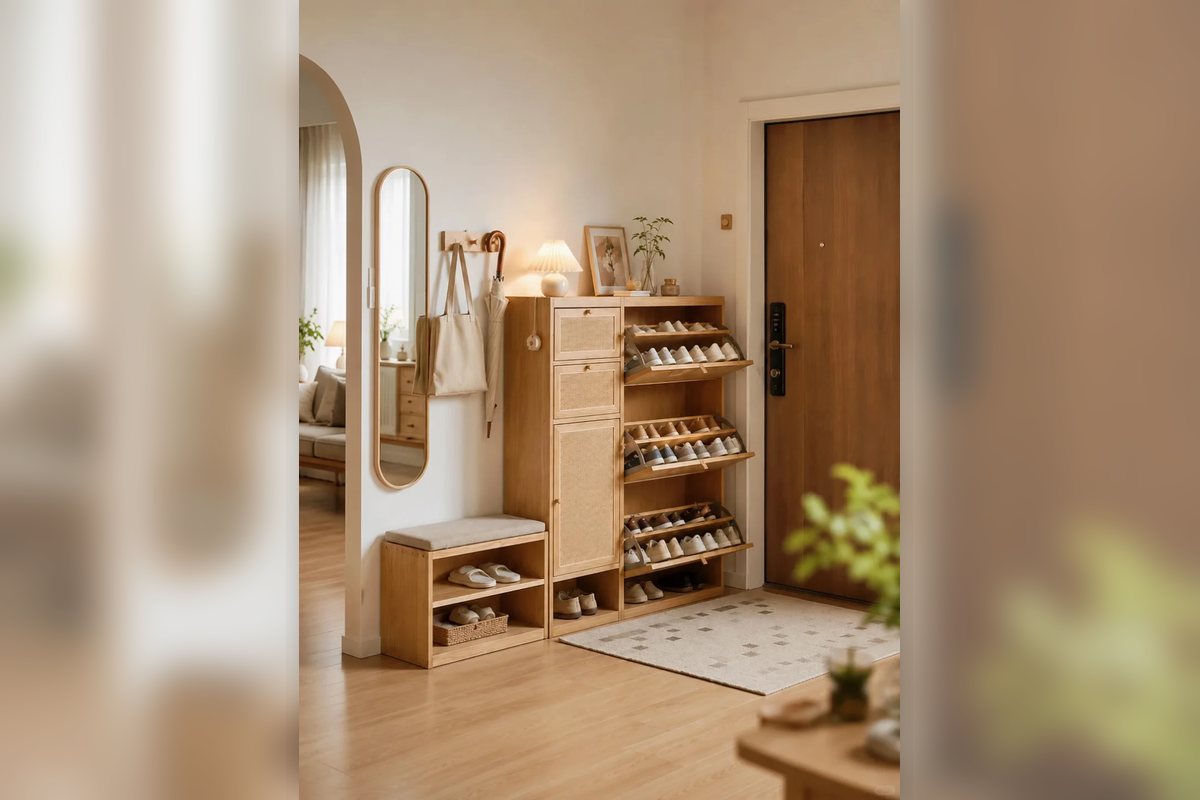
Create a useful landing zone for shoes, bags, and keys while keeping the front door and walkway clear.
- The best entryway bench is shallow enough to leave the door path and hallway comfortable.
- Open shoe benches are faster for daily shoes; closed benches look calmer but need ventilation and lid clearance.
- A bench works best with a nearby tray, hook, or wall pocket so the seat does not become a catchall.
More apartment layout examples
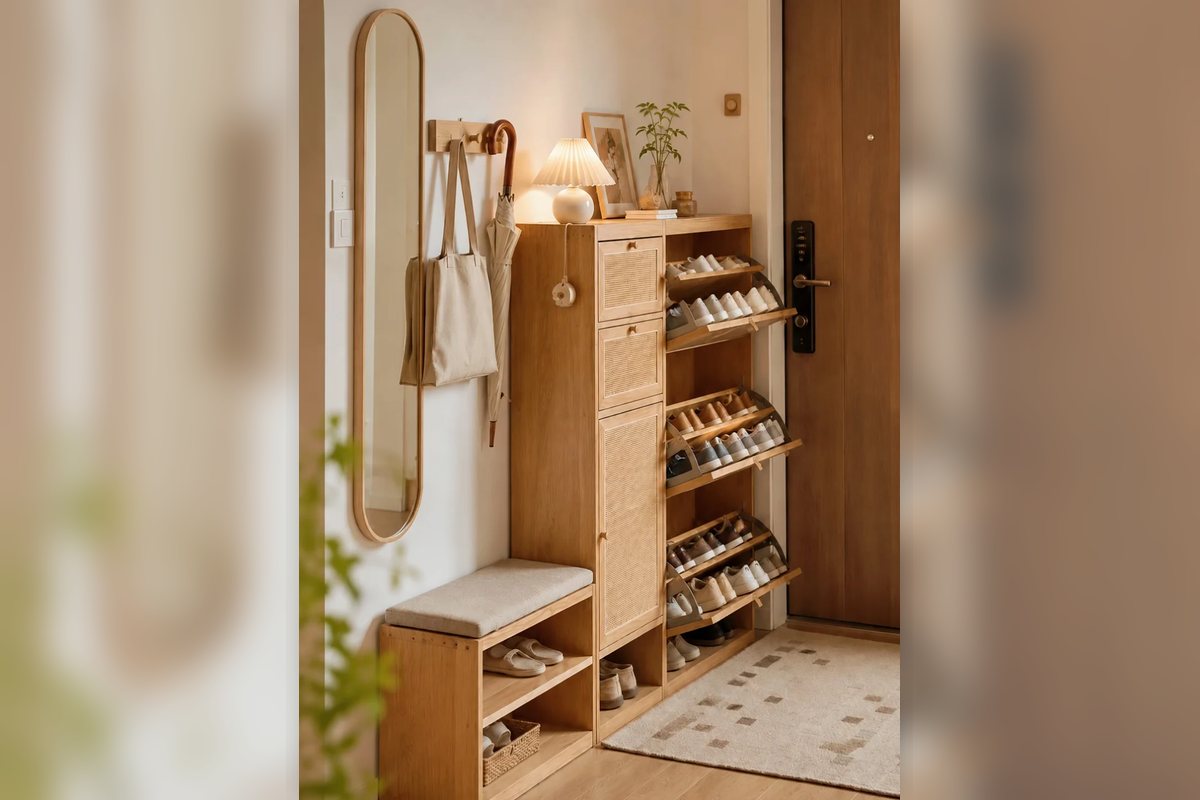
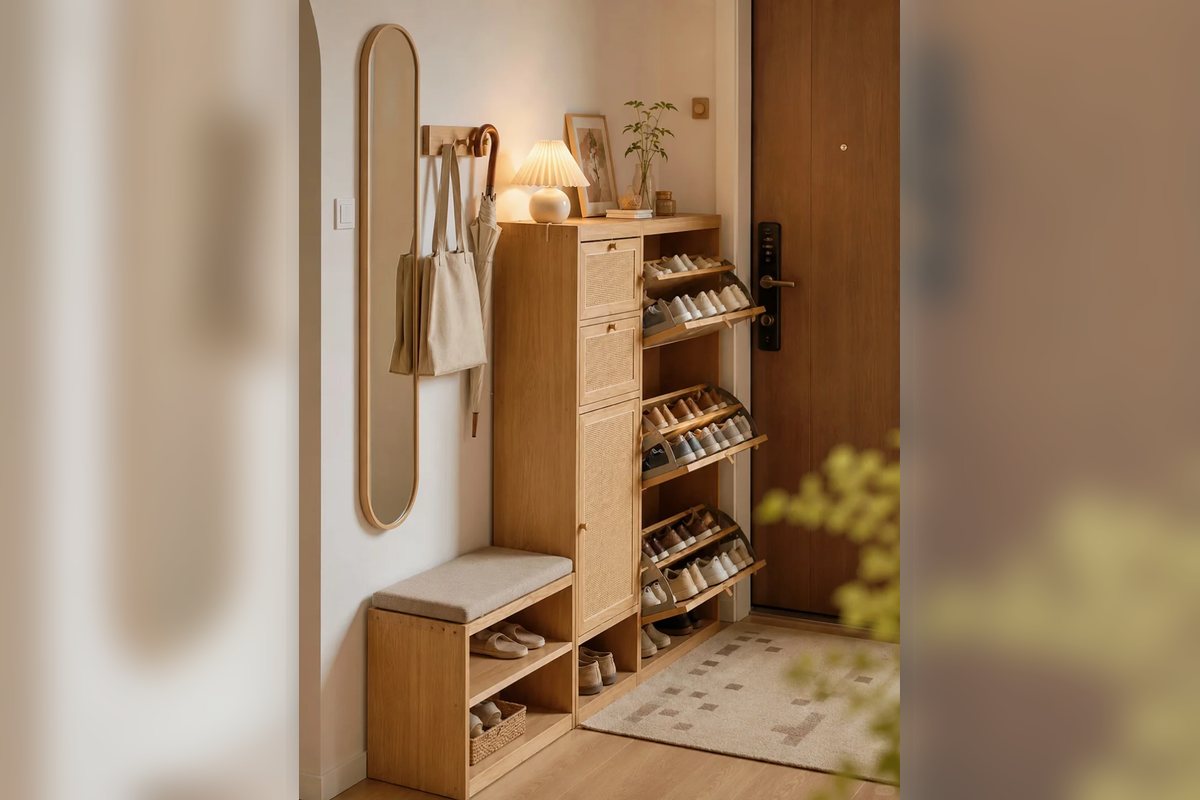
Use these storage setups as fit checks before choosing bins, shelves, drawers, or no-drill organizers for a rental.
Who this guide helps
- Narrow foyers
- Studio entries
- No mudroom homes
- Shoe drop zones
Product-type comparison
| Option | Best for | Check before buying |
|---|---|---|
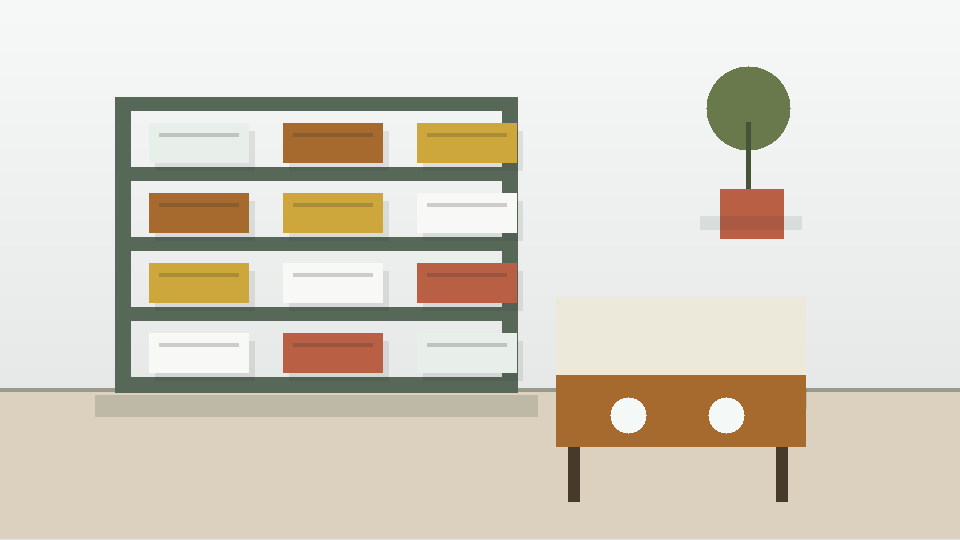
| Open shoe bench | Daily shoes and quick seating | Shoes remain visible |
| Lift-top storage bench | Seasonal items and bags | Needs clearance to open |
| Narrow upholstered bench | Visual softness in a hallway | May lack shoe storage |
| Bench with cubbies | Shared apartments | Fixed cubby sizes limit boots |
How to choose
- Depth: A bench should leave comfortable clearance for the door and walkway.
- Seat height: Look for a height that works for putting on shoes without wobbling.
- Storage style: Open for speed, closed for visual calm, cubbies for shared households.
- Surface: Choose wipeable finishes near doors where wet shoes and bags land.
Measure before buying
An entryway bench should create a landing zone without becoming an obstacle; depth, door swing, and storage style decide whether it helps.
- Bench depth: Tape the footprint on the floor and confirm the front door, closet door, and walking path still work.
- Seat height: Check whether the seat feels stable for putting on shoes and whether storage below still fits daily pairs.
- Lid clearance: Lift-top benches need enough room to open without hitting a wall, coat rack, or door.
- Shoe height: Measure boots and bulky sneakers before choosing cubbies or low shelves.
Apartment size scenarios
Use these examples to translate the guide into a real apartment layout before you compare products.
36-inch entry wall
Use a shallow bench only if the door can open fully and there is still room to stand while putting on shoes.
12- to 15-inch bench depth
Tape the footprint first. If that depth crowds the path, a slim shoe cabinet, tray, or hook rail will feel better than a bench.
30-inch hallway path
Keep enough clear passage for grocery bags, laundry baskets, and guests. The best bench is the one you do not have to sidestep every day.
Shared apartment
Choose cubbies or open shelves that assign space by person rather than one mixed shoe pile.
Choose it if / skip it if
Choose it if
- The entry needs both seating and a controlled shoe drop zone.
- The bench leaves a comfortable path and does not block the door swing.
- You can pair it with hooks, a tray, or a wall pocket for non-shoe items.
Skip it if
- The hallway is too narrow for the bench depth.
- The bench would become a catchall for mail, bags, and laundry.
- Closed storage would trap damp shoes or hide clutter you need daily.
Common small-space mistakes
- Buying a bench by length while forgetting depth and door swing.
- Choosing closed storage for wet daily shoes without ventilation.
- Skipping a key tray or hook rail, then using the seat as a pile zone.
Layout fit examples
Use the product type as a match for a specific apartment layout, not as a universal fix. The same organizer can feel excellent in one zone and annoying in another if reach, door swing, lighting, or cleaning access is wrong.
Often works well
- Open shoe bench: strongest for daily shoes and quick seating.
- Lift-top storage bench: strongest for seasonal items and bags.
- Narrow upholstered bench: strongest for visual softness in a hallway.
Check twice when
- Open shoe bench: check twice when shoes remain visible.
- Lift-top storage bench: check twice when needs clearance to open.
- Narrow upholstered bench: check twice when may lack shoe storage.
Product page checks
Before treating an item as a serious candidate, verify the current retailer page rather than relying on a photo or a short product title. Small-space storage fails most often when the listed size, material, mounting method, or return policy is ignored.
- Exact dimensions: Compare listed width, depth, height, and clearance to the measured apartment zone for this entryway & living room project.
- Material and finish: Confirm whether the surfaces are plastic, metal, fabric, bamboo, wire, or MDF because cleaning, moisture tolerance, and durability change quickly by material.
- Assembly and removal: Look for required tools, wall fasteners, adhesive cure times, leveling feet, wheels, or hardware that could affect a rental or a future move.
- Load and daily use: Match the stated load limit to the heaviest realistic contents, then ask whether the item will still be easy to open, pull, lift, or clean when full.
- Return window: Check the retailer return policy before ordering large or assembled items, especially when the fit depends on a narrow closet, cabinet, or entryway.
Apartment fit note
A good entry bench is part of a small drop-zone system: shoes below, bags or coats nearby, and small items in a tray or wall pocket.
Pros and cons
Pros
- Creates a useful landing zone
- Can combine seating and shoe storage
- Makes entry routines easier
Cons
- Wrong depth blocks traffic
- Closed benches can hide clutter
- Low-quality benches wobble
Alternative: If there is no room for a bench, use a wall hook rail plus a slim shoe cabinet or tray.
Small-space setup steps
- Tape the bench footprint on the floor before buying.
- Limit entry storage to daily shoes and one bag per person.
- Add a small dish or wall pocket for keys instead of using the seat as a catchall.
Product examples to compare
Use these links as starting points for comparing dimensions, materials, availability, retailer policies, and whether the item fits your measured space.
Related small-space guides
Continue with guides that solve the next storage decision in the same apartment zone.
FAQ
How deep should an entryway bench be for a small apartment?
Many compact benches are about 12 to 15 inches deep, but the right depth depends on the door swing, hallway width, and whether shoes will sit under the seat.
Should an entryway bench have open or closed storage?
Open storage is faster for daily shoes and airflow. Closed storage looks calmer but can hide clutter and needs enough room to open.
What height should an entryway bench be?
A seat height around normal chair height usually feels easiest for putting on shoes, but confirm it works with the users and the shoe storage below.
Can a bench fit in a narrow hallway?
Yes, if it leaves a comfortable path and does not block the front door, closet door, vents, or light switches.
What should go above an entryway bench?
A hook rail, small mirror, wall pocket, or key tray can finish the drop zone without adding more floor furniture.